
5 Common Gym Mistakes Every Beginner Makes—and How to Fix Them
One of the best choices you can make for your health is to begin your fitness journey. Joining a gym is a terrific place to start if you want to improve your fitness, gain muscle, lose weight, or just feel better. But it might also be scary to enter a gym for the first time. It might be difficult to know where to start when there are so many machines, exercise regimens, and skilled lifters available.
In actuality, practically all seasoned gym patrons were once beginners. Along the road, everyone has made mistakes. Fortunately, most of these errors are totally preventable if you know what to watch out for. Not only will avoiding them improve your performance, but it will also help you stay motivated, lower your chance of injury, and enjoy your workouts much more.
Many novices think that in order to make progress, they must lift the largest weights or train harder every day. In actuality, patience, adequate recuperation, technique, and consistency are the keys to success in the gym. During the first few weeks, developing healthy habits is far more crucial than trying to impress people.
In order to make your fitness journey easier and more fruitful, we’ll look at five typical gym mistakes made by beginners and, more importantly, how to correct them.
1. Ignoring the warm-up
Walking directly to the weights without warming up is one of the most frequent blunders novices make at the gym. Many people are excited to begin working out as soon as they get to the gym. This may appear to be a time-saving method, but it actually lowers exercise performance and raises the chance of injury.
After spending hours at home, driving, or sitting at work, your muscles are typically stiff. Your body isn’t entirely prepared for intensive movement, so jumping right into hard activities might strain your muscles, ligaments, and joints.
Warming up properly raises your heart rate, enhances blood flow, and gets your muscles ready for exercise. Additionally, it increases mobility and flexibility, which makes exercising feel simpler and more efficient.
How to Make It Right
Before each workout, spend at least five to ten minutes warming up.
An effective warm-up can consist of:
Using a treadmill to walk
Cycling and light jogging
Leap rope
A rowing machine
Instead of holding long static stretches after your light exercise, do active stretches. By improving mobility, dynamic motions prime your muscles for exercise.
The following are some excellent warm-up exercises:
Circles of the arms
Swings of the legs
Squats using your own body weight
Lunges while walking
Circles of the hips
Rolls of the shoulders
Before using heavier weights for your initial exercise, complete a few light sets if you’re working a particular muscle area.
If you want to bench press, for instance, start with simply the bar or extremely modest weights for one or two sets. This gets your arms, shoulders, and chest ready for the more demanding work that lies ahead.
Warming up for ten minutes can prevent needless injuries from taking weeks to heal.
2. Heavy Weight Lifting
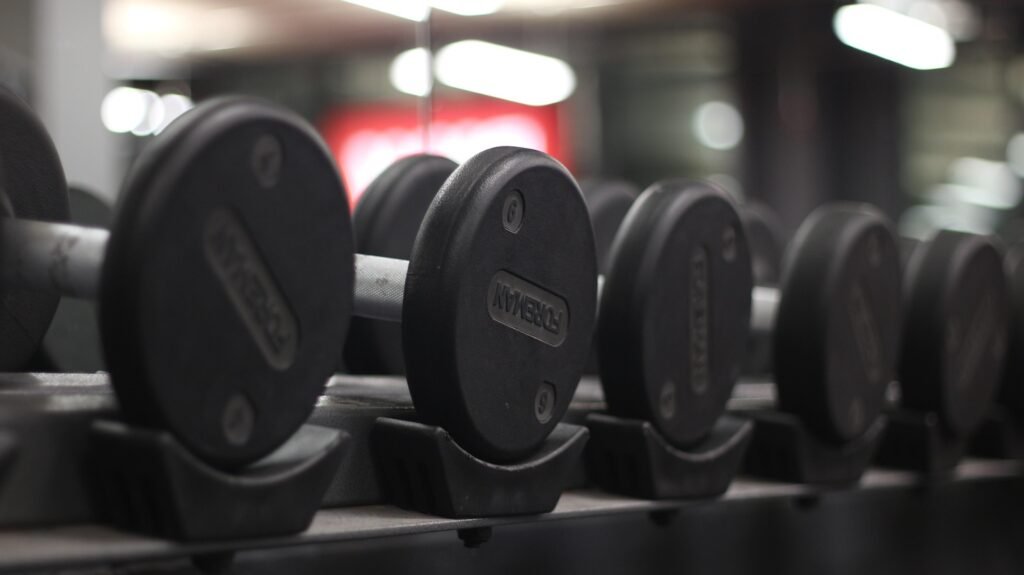
Trying to lift more weight than your body can manage is another of the most frequent blunders made in the gym.
A lot of beginners believe they can gain muscle more quickly by lifting larger weights. Social media frequently gives the impression that everyone is working really hard, which puts needless pressure on users to keep up.
In actuality, bad form is typically the result of lifting too much weight too soon.
Your body starts swinging the weight, using momentum, or depending on other muscle groups to finish the movement rather of using the target muscles. This not only hinders muscular growth but also puts undue strain on your lower back and joints.
For example, when doing bicep curls with very large weights, the person frequently leans back and swings the dumbbells rather than engaging their biceps.
Although this error may appear spectacular, it doesn’t yield improved outcomes.
How to Make It Right
Select a weight that will enable you to execute each repeat correctly.
Choosing a weight that feels difficult during the final two or three repetitions while still enabling you to fully control the movement is a straightforward rule of thumb.
It doesn’t matter what other people are lifting.
Everybody has a distinct body type, amount of experience, and fitness objectives.
Instead of evaluating yourself against others, concentrate on your own development.
Use progressive overload to progressively raise the weight as you gain strength. Over time, modest improvements result in steady muscle growth while lowering the chance of injury.
Recall that lifting large objects with bad form will never result in the same long-term results as excellent technique.
3. Disregarding Correct Exercise Form
One of the most crucial aspects of strength training is mastering technique, however novices frequently ignore this.
When they see someone else execute an exercise, a lot of new members of the gym want to mimic it without knowing the proper technique.
Regrettably, practicing workouts incorrectly can result in severe injuries, muscular imbalances, and unsatisfactory results.
Exercises that call for proper posture and deliberate movement include squats, deadlifts, bench presses, overhead presses, and rows.
Your knees, shoulders, neck, or lower back may experience additional strain as a result of even minor technique errors.
For instance, you run a far higher risk of lower back injury if you round your back when performing a deadlift.
In a similar vein, allowing your knees to fall inward during a squat increases joint tension and decreases stability.
How to Solve It
Avoid trying to learn every exercise in a single day.
Rather, learn the fundamentals first.
Until you feel confident, practice your moves with just your body weight or very light weights.
Ask a qualified trainer to show the proper technique if at all possible.
Additionally, you can utilize the gym’s mirrors to examine your posture or record yourself doing out.
Quantity is never more significant than quality.
It is considerably preferable to perform fewer repetitions with perfect form than to perform more repetitions with poor form.
4. Not Following to a Planned Exercise Program
Entering the gym without a plan is one of the most frequent blunders made by novices. After doing a few sets of curls, trying out a few different machines, and spending a few minutes on the treadmill, they leave for home. Although this may seem beneficial, it typically doesn’t result in steady advancement.
Your training has a purpose thanks to a workout plan. You’ll know precisely which exercises to perform, how many sets and repetitions to finish, and which muscle groups you’re training, so you won’t have to guess what to do every time you visit the gym. This keeps you from wasting time and keeps you focused.
Random workouts also have the drawback of frequently overworking some muscles while ignoring others. For example, a lot of novices focus a lot of training on their arms and chest because those muscles are readily apparent, but they neglect their legs and back. This leads to muscular imbalances over time, which can impact strength, posture, and general performance.
How to Make It Right
Start with a basic exercise program meant for novices. A complex regimen with numerous workouts is not necessary. Actually, it’s usually best to keep things simple.
For most beginners, a simple full-body workout three times a week is sufficient. Pay attention to compound movements such as deadlifts, shoulder presses, rows, bench presses, and squats. These exercises help you develop strength more effectively by working several muscle groups at once.
To track your progress, it’s also a good idea to utilize a fitness app or keep an exercise log. Keep a log of the exercises you do, the weights you lift, and the quantity of sets and repetitions. You can decide when it’s time to raise the bar by reviewing your progress, which is quite motivating.
Remember that an effective exercise regimen doesn’t need to be flawless. All that is required is consistency.
5. Looking for Overnight Results
Expecting significant results in a matter of weeks is arguably the biggest of all common gym blunders.
Many people have great hopes when they first start working out. They envision developing several pounds of muscle virtually instantly or seeing noticeable abs within a month. They grow disheartened and eventually quit going to the gym when these improvements don’t occur as soon as anticipated.
In actuality, maintaining your fitness requires sustained effort. Your body requires time to grow stronger, adjust to training, and recuperate from exercise. Genuine advancement doesn’t come overnight.
Social media can exacerbate this challenge. Comparing yourself to seasoned lifters or fitness influencers who have devoted years to developing their bodies is simple. The work, dedication, and consistency that go into achieving outcomes are sometimes hidden from view.
Consider your own journey rather than comparing your Chapter One to someone else’s Chapter Twenty.
How to Make It Right
Establish achievable goals and acknowledge minor advancements as you go.
Possibly you lifted five kg more than you did the previous week. Maybe you felt less exhausted during your training or finished an additional repetition. Even if they don’t show up right away in the mirror, these are all indications of development.
Another excellent method to monitor your change is to take progress photos once a month. Physical changes are often difficult to observe on a daily basis since they occur gradually. You can see your progress much more clearly when you take monthly pictures.
Above all, keep in mind that consistency is preferable to perfection. Your progress won’t be ruined by missing one session, but giving up completely will.
Extra Advice for Every New Gym Member
Now that you are aware of the most frequent gym blunders, let’s have a look at some more advice that can keep you motivated and enjoy your fitness journey.
Keep Yourself Hydrated
Water is essential for both performance and recuperation. Fatigue, headaches, cramping in the muscles, and difficulty focusing during exercise can all result from dehydration.
Instead of waiting until you’re thirsty, carry a bottle of water with you and take sips during your workout.
Consume Enough Protein
Protein aids in the rebuilding and regeneration of muscle tissue that is broken down by exercise. Including healthy protein sources in your meals helps promote muscle growth and enhance recuperation.
Excellent options include fish, chicken, eggs, Greek yogurt, beans, lentils, tofu, and cottage cheese.
Don’t Miss Your Rest Days
Many novices think that in order to advance, they must train daily. In actuality, your muscles develop during rest rather than during weightlifting.
Your body can recuperate, weariness can be decreased, and overtraining can be avoided by taking one or two days off each week.
Pay Attention to Consistency
You don’t have to work out flawlessly every day. The most important thing is to consistently show up.
It’s still preferable than skipping your workout entirely, even if you just have thirty or forty minutes to train. Over time, small efforts that are continuously repeated produce large outcomes.
Make inquiries
If you’re not sure how to operate a machine or complete an activity, don’t be afraid to contact the gym staff or knowledgeable trainers for assistance.
Everyone begins somewhere, and most individuals are glad to assist someone who is sincere in their desire to learn.
Concluding Remarks
It may seem difficult to begin your fitness journey, but don’t let that deter you. Every seasoned gym-goer started out as a novice and had to learn by making mistakes. It’s very acceptable to make errors; what counts is that you learn from them and keep getting better.
You may increase the effectiveness, safety, and enjoyment of your workouts by avoiding these common gym mistakes. Make time for a decent warm-up, concentrate on utilizing the right technique, select weights that match your present strength, stick to an exercise schedule, and be patient with your improvement.
Above all, avoid comparing yourself to other members of the gym. Everybody’s path and beginning place are unique. With every workout, concentrate on getting a little stronger and more self-assured rather than worrying about what other people are doing.
Recognize that being flawless or getting results right away are not the goals of fitness. It’s about establishing and maintaining long-term healthy behaviors that fit your lifestyle. It will be easier on some days than others, but what really counts is consistency.
Whatever of your objectives—weight loss, muscular growth, increased endurance, or just feeling better—being consistent and avoiding these typical blunders will help you get there. Continue to study, be dedicated, and relish the process. You get closer to being the healthiest version of yourself with each workout.