
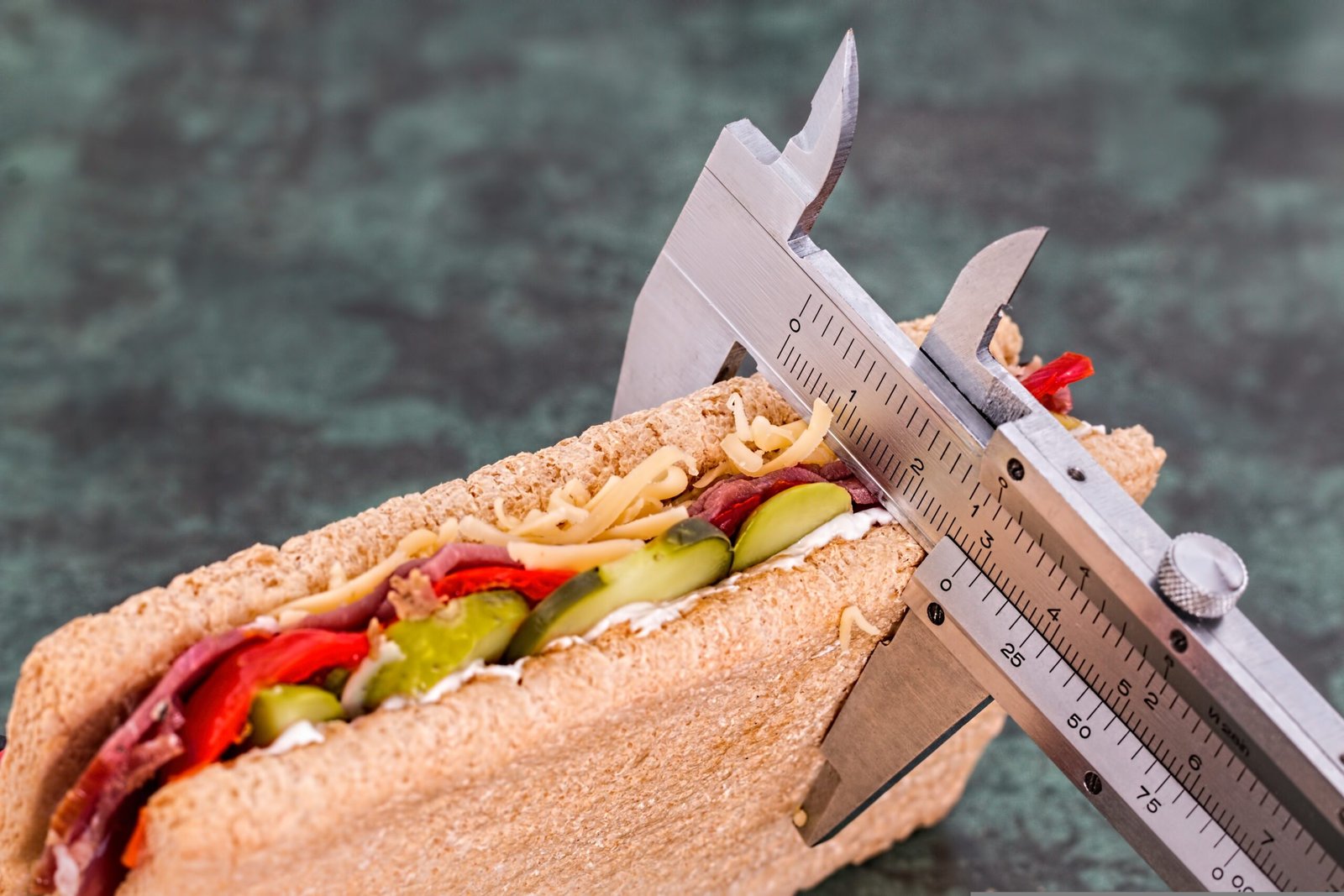
Calorie Deficit Stopped Working? Here’s Why the Scale Won’t Budge
You did everything right. You counted your calories, hit your protein target most days, and stuck to a deficit that used to drop weight steadily. Then, out of nowhere, the scale froze. A week goes by. Then two. You’re eating the same way you were when the weight was coming off, but now nothing happens.
If this sounds familiar, you’re not broken, and you’re not doing something fundamentally wrong. Calorie deficits stop working for very specific, well-understood reasons — and almost all of them are fixable once you know what to look for.
In this guide, you’ll learn why weight loss stalls even when you’re technically in a deficit, how to figure out which reason applies to you, and exactly what to adjust to get things moving again. No fad fixes, no “eat this one food” gimmicks — just the actual physiology and practical steps that experienced coaches and dietitians use to troubleshoot stalls with real clients.
Why a Calorie Deficit Stops Working: The Short Answer
A calorie deficit stops producing weight loss when your actual energy intake or output has shifted enough to close the gap between calories in and calories out — even if your habits look the same on paper. This usually happens because your metabolism has adapted downward, your tracking has become less accurate over time, water retention is masking fat loss, or your activity level has quietly dropped.
In plain terms: the deficit that existed at week one may not exist anymore, even though your plate looks identical.
Let’s break down each cause so you can identify which one is happening to you.

1. Your Metabolism Has Adapted (Metabolic Adaptation Is Real)
When you lose weight, your body doesn’t just get smaller — it gets more efficient. This is called adaptive thermogenesis, and it’s one of the most well-documented reasons diets stall.
Here’s what happens: a smaller body burns fewer calories at rest simply because there’s less tissue to maintain. On top of that, your body tends to reduce non-exercise activity — you fidget less, walk a little slower, take the stairs with a bit less enthusiasm — often without you noticing. Hormonal shifts, including drops in leptin and thyroid hormone output, also nudge your metabolic rate down further than body size alone would predict.
What this means practically: if you lost 15 pounds since you started, your maintenance calories today are lower than they were at your starting weight. A deficit that worked at 180 pounds may now be your exact maintenance level at 165 pounds.
What to do:
- Recalculate your calorie needs based on your current weight, not your starting weight, every 10-15 pounds lost.
- Expect to need a small downward adjustment (typically 100-200 calories) every few weeks as you get leaner.
- Avoid cutting drastically in response — a large cut on top of an already-adapted metabolism accelerates muscle loss and makes the next plateau worse.
2. Calorie Tracking Has Quietly Become Less Accurate
This is the most common culprit, and it’s rarely intentional. Tracking accuracy naturally erodes over time — a phenomenon nutrition researchers sometimes call “calorie creep.”
It shows up in small ways: eyeballing portions instead of weighing them, forgetting the olive oil used in cooking, rounding down on snacks, or trusting restaurant menu estimates that are often off by 20% or more. None of these feel like cheating. They feel like living your life. But they add up fast — an extra 150-200 calories a day is enough to completely erase a modest deficit.
A quick self-check: if you’ve been tracking for more than 6-8 weeks, ask yourself honestly — are you still weighing food on a kitchen scale, or have you started estimating? Are you logging condiments, cooking oils, and drinks, or just the “main” items?
What to do:
- Go back to a food scale for 1-2 weeks, even if it feels tedious. This alone resolves a large share of stalls.
- Log everything, including coffee additions, cooking fats, and bites of other people’s food.
- Double-check restaurant and packaged food entries against the actual label rather than trusting a database’s first search result.
3. Water Retention Is Hiding Fat Loss
The scale measures total body mass, not fat mass — and water can swing your weight by several pounds in either direction without any change in body fat.
Common causes of temporary water retention include higher sodium intake, increased carbohydrate intake (each gram of stored carbohydrate holds roughly 3 grams of water), new or harder workouts causing muscle inflammation and repair, hormonal fluctuations, high stress and elevated cortisol, and poor sleep. Any one of these can mask two or three weeks of genuine fat loss on the scale.
What to do:
- Track your weight as a weekly average, not a daily number. Daily fluctuations are noise; the trend line is the signal.
- Take waist or hip measurements every two weeks alongside the scale — fat loss often shows up there before the scale reflects it.
- If you just started a new training program, give it 2-3 weeks before judging progress by weight alone

4. Your Activity Level Has Dropped Without You Noticing
This one catches people off guard. As you lose weight and possibly reduce calories, your body compensates by moving less — not through conscious choice, but through subtle reductions in daily movement (NEAT, or non-exercise activity thermogenesis).
A desk-based day that used to include restless energy and fidgeting can quietly become more sedentary. Steps drop from 9,000 a day to 6,500. Workouts stay the same on paper, but effort within them softens as fatigue builds from the deficit itself.
What to do:
- Track your daily steps for one week without changing anything, then compare it to your steps from a month or two ago.
- If activity has dropped, don’t panic-add cardio. Instead, rebuild baseline movement first — a short daily walk is more sustainable than an extra gym session bolted onto an already tired body.
- Consider that fatigue from an aggressive deficit may be the actual cause of reduced movement, which points back to reassessing how aggressive your deficit really is.
5. You’ve Reached a Genuine Physiological Plateau
Sometimes everything above checks out — tracking is accurate, water isn’t the issue, and activity has held steady — and the deficit still isn’t producing loss. This can happen when the deficit has simply become too small relative to normal day-to-day variance in intake and output.
A 200-calorie deficit, for example, is easily wiped out by minor daily fluctuations in movement or digestion. What felt like a reliable deficit at a higher calorie intake can become statistically invisible as your maintenance calories shrink alongside your body weight.
What to do:
- Reassess whether your current deficit is still meaningfully below maintenance — not just below your original starting-point maintenance.
- Consider a short diet break (1-2 weeks at maintenance calories) to allow hormones like leptin to partially recover before resuming the deficit. This is a well-supported strategy for long-term dieters, not a sign of giving up.
- If you’ve been dieting continuously for more than 12-16 weeks, a break is often more productive than pushing calories lower.

6. Muscle Gain Is Offsetting Fat Loss
If you started strength training around the same time you began your deficit — especially if you’re newer to lifting — some of the stall may reflect muscle gain happening alongside fat loss, sometimes called body recomposition.
This is more likely if you’re newer to structured resistance training, you’re eating adequate protein (generally 1.6-2.2g per kilogram of body weight), and your clothes fit differently even though the scale hasn’t moved much.
What to do:
- Don’t rely on the scale alone. Track progress photos monthly and take circumference measurements.
- If your waist is shrinking while your weight holds steady, the deficit is working — the scale is just an incomplete tool for measuring it
How to Diagnose Your Specific Stall: A Step-by-Step Checklist
Rather than guessing, work through this in order:
- Check your weekly average, not single days, over the last 3-4 weeks. Is it truly flat, or just noisy?
- Audit your tracking accuracy for 5-7 days using a kitchen scale and logging everything, including drinks and condiments.
- Review recent changes — new workouts, higher sodium meals, poor sleep, travel, or added stress in the last 2-3 weeks.
- Compare your step count to a month ago using your phone or wearable’s history.
- Calculate your current maintenance calories based on your current weight, not your starting weight.
- Consider your diet duration — if you’ve been in a continuous deficit for 3+ months, a maintenance break may be the missing piece.
Most people find their answer within the first three steps.
FAQ: Common Questions About Calorie Deficit Plateaus
Why did my weight loss suddenly stop even though I haven’t changed anything? Even without deliberate changes, your metabolism, water retention, and small daily habits shift naturally over time. A deficit that existed at week one can quietly close as your body adapts and your tracking accuracy drifts, even if your routine feels identical.
How long should I wait before adjusting my calories during a plateau? Give it 2-3 weeks of an accurate weekly average before making changes. Weight fluctuates daily due to water and digestion, so a single flat week isn’t necessarily a true plateau — a consistent flat trend across 2-3 weeks is a stronger signal.
Is it normal for a calorie deficit to stop working after a few months? Yes. Metabolic adaptation and reduced non-exercise activity are well-documented responses to sustained dieting, and most people experience at least one meaningful plateau during a multi-month fat loss phase. It doesn’t mean the approach has failed.
Should I eat less or exercise more when my deficit stops working? Neither, at first. Start by auditing tracking accuracy and recent lifestyle changes. If those check out and the deficit is genuinely too small, a modest calorie reduction (100-150 calories) is usually more sustainable than adding significant extra exercise on top of existing fatigue.
Can stress or poor sleep really stop a calorie deficit from working? Yes. Elevated cortisol from stress and inadequate sleep are strongly linked to water retention and can also increase hunger and reduce motivation for movement, both of which can stall visible progress even when calorie intake is technically in a deficit.