
Where Does Fat Actually Go When You Lose Weight?
Ask most people where fat goes when you lose weight, and you’ll hear some version of “it turns into energy” or “it gets burned off.” Both answers sound reasonable, and both are wrong in a way that actually matters. A 2014 study published in the BMJ surveyed doctors, dietitians, and personal trainers and found the overwhelming majority couldn’t correctly answer this question — which says something about how rarely this gets explained clearly, even by people whose job involves fat loss.
The real answer is stranger and more satisfying than “it disappears”: you breathe most of it out.
The Wrong Answers, and Why They’re Wrong
“It turns into energy” violates a basic law of physics — the conservation of mass. Energy and mass are related, but fat doesn’t simply convert into an abstract, weightless “energy” that vanishes. Matter doesn’t disappear; it goes somewhere physical.
“It converts to muscle” is also incorrect — fat and muscle are entirely different types of tissue made of different building blocks. Fat cells don’t transform into muscle cells; at best, you lose fat and build muscle simultaneously through separate, unrelated processes.
“It gets flushed out through urine or sweat” is partially reasonable-sounding but numerically wrong — only a small fraction of the mass involved leaves this way. The overwhelming majority exits through a route almost nobody guesses correctly.

The Actual Answer: You Exhale It
Fat is stored in your body as triglycerides, which are molecules made primarily of carbon, hydrogen, and oxygen atoms. When your body needs energy and breaks down stored fat (a process called lipolysis), those triglyceride molecules are converted, ultimately, into carbon dioxide (CO2) and water (H2O) through cellular respiration — the same basic process every cell uses to produce usable energy.
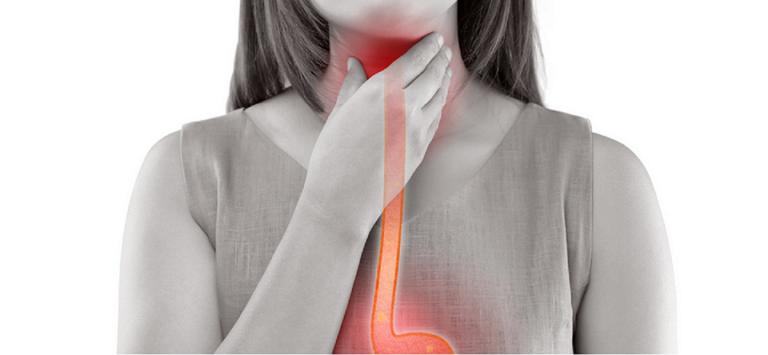
Here’s the part that surprises most people: the carbon dioxide produced from this process leaves your body when you exhale. Every breath you take out contains some of the carbon that used to be stored fat. The water produced is eliminated through urine, sweat, and breath as well, but it’s the CO2 — released through your lungs — that accounts for the large majority of the actual mass lost.
The Numbers, Made Concrete
The 2014 BMJ study calculated this precisely: to lose 10 kilograms (about 22 pounds) of fat, roughly 8.4 kilograms is exhaled as carbon dioxide, and the remaining 1.6 kilograms becomes water, eliminated mainly through urine (with smaller amounts through sweat, breath moisture, and other bodily fluids).
That means for every pound of fat you lose, roughly 84% leaves your body through your lungs — not your muscles working it “out,” not sweat, not the bathroom. Your respiratory system is, quite literally, doing most of the heavy lifting in fat loss.
Why This Actually Matters (Beyond Trivia)
Understanding this mechanism clears up a few genuinely useful points:
“Spot reduction” makes even less biological sense once you see this
If fat leaves the body as CO2 through the bloodstream and lungs — a whole-body, systemic process — there’s no physical mechanism by which working a specific muscle would preferentially pull fat from the fat cells sitting near it. Crunches don’t create a direct pipeline from belly fat to your lungs any more than squats create one from thigh fat. Fat loss location is determined by genetics and hormones, not by which muscle you’re currently training.
Exercise “burning calories” has a literal, physical meaning
When people say exercise “burns” calories, this is closer to literally true than most casual language about the body — increased activity increases the rate of cellular respiration breaking down stored fuel (including fat), which increases the rate of CO2 production and exhalation. More intense or prolonged effort genuinely does mean more breath-based carbon output, tied directly to energy expenditure.
This is why breathing rate increases during fat-burning exercise
Beyond simply needing more oxygen for muscular effort, an elevated breathing rate during exercise is partly your body’s mechanism for clearing out the increased CO2 production from accelerated fat and carbohydrate breakdown. The heavier breathing during a hard workout isn’t just about oxygen in — it’s substantially about carbon out.

A Simple Way to Visualize It
| Stage | What’s Happening |
|---|---|
| Fat is stored | Triglycerides sit in fat cells, made of carbon, hydrogen, and oxygen atoms |
| Energy is needed | Your body breaks down triglycerides through lipolysis and cellular respiration |
| Byproducts form | This process produces carbon dioxide (CO2) and water (H2O) |
| Mass leaves the body | ~84% of the mass exits as CO2 through exhaled breath; ~16% as water through urine, sweat, and breath moisture |
Does This Change How You Should Actually Lose Fat?
Not the practical approach — a calorie deficit, adequate protein, and consistent activity remain exactly as important as ever, since they’re what drives the rate at which your body breaks down stored fat in the first place. What this does change is the mental model: fat loss isn’t fat “melting away” or being “burned up” in some abstract sense — it’s a concrete chemical process with a literal, physical, and slightly surprising exit route.
The Bottom Line
The fat you lose doesn’t vanish, convert to muscle, or mostly sweat out — it’s chemically broken down and the majority of its mass leaves your body as carbon dioxide, exhaled with every breath, with the remainder eliminated as water. It’s one of those rare facts about the human body that’s both scientifically accurate and genuinely counterintuitive — and understanding it puts to rest a few persistent myths, like spot reduction, that don’t hold up once you know where the mass is actually going.