

How to Create a Weekly Meal Plan for Weight Loss Without Feeling Restricted
Most weight loss meal plans fail for a predictable reason: they’re built like punishment. Plain chicken breast, steamed broccoli, and a rice cake at 3pm might technically create a calorie deficit, but nobody sticks with a plan that feels like deprivation, and the moment willpower runs out, the diet ends with it.
A meal plan that actually works long-term looks different. It still creates a calorie deficit — that part isn’t optional for weight loss — but it’s built around foods that genuinely satisfy you, with enough flexibility that one imperfect day doesn’t derail the whole week.
This guide walks through how to build that kind of plan for yourself, step by step, without needing to weigh every almond or give up the foods you actually enjoy.
Why Restrictive Meal Plans Usually Fail
Extremely low-calorie or highly restrictive plans tend to backfire for a few consistent reasons. They often cut out entire food groups, which increases cravings for exactly what’s being avoided. They frequently don’t include enough protein or fiber, so hunger builds throughout the day. And because they feel like a temporary punishment rather than a sustainable routine, most people abandon them within a few weeks — often regaining any weight lost, and sometimes more.
A better-performing approach, backed by both research and practical experience, focuses on a moderate calorie deficit combined with foods that keep you full, while leaving room for the meals and treats that make eating enjoyable. It’s slower, but it’s the version people actually stick with.
Step 1: Figure Out Your Calorie Target
Weight loss ultimately comes down to consistently eating fewer calories than your body burns — there’s no way around that principle, regardless of which specific foods make up your plan. A moderate deficit of 300-500 calories below your maintenance level is generally the sweet spot: enough to produce steady weight loss without the extreme hunger and muscle loss that come with more aggressive deficits.
You don’t need to calculate this down to the exact calorie. A simple approach many people use: estimate your maintenance calories using an online calculator based on your age, weight, height, and activity level, then subtract 300-500 to get your target range.

Step 2: Build Each Meal Around Protein First
Protein is the single most filling macronutrient, and it’s the piece most restrictive diets shortchange. Aim for roughly 25-35 grams of protein at each main meal — chicken, fish, eggs, tofu, Greek yogurt, or legumes all work.
Starting your meal planning with protein, then building the rest of the plate around it, naturally sets you up for better portion control later, since protein-rich meals reduce hunger and cravings more effectively than carb-heavy ones.
Step 3: Fill Half Your Plate With Vegetables
Vegetables add volume, fiber, and nutrients for relatively few calories, which means you can eat a genuinely large portion without derailing your calorie target. This is one of the simplest ways to feel physically full and satisfied on fewer calories than a plate dominated by refined carbs would require.
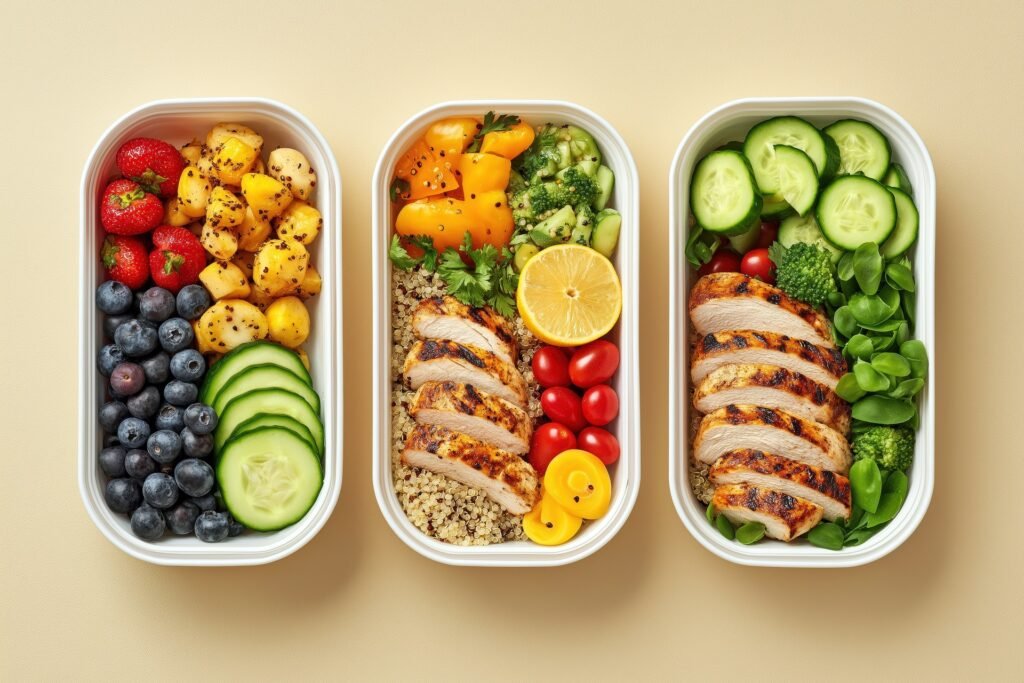
A practical rule that works without any calorie counting: fill half your plate with vegetables, a quarter with a protein source, and a quarter with a carbohydrate like rice, potatoes, or whole grains.

Step 4: Keep One or Two Meals You Genuinely Enjoy Each Week
This is the step restrictive plans skip, and it’s a big part of why they fail. Building in one or two meals a week that you actually look forward to — pizza night, a favorite restaurant dish, dessert with dinner — makes the rest of the week far easier to stick to, because you’re not white-knuckling through total restriction.
The goal isn’t a “cheat meal” that erases your progress; it’s simply accounting for it within your weekly calorie total. A treat meal on Friday doesn’t undo four days of consistent eating, and reframing it that way removes a lot of the guilt that derails people’s motivation altogether.
Step 5: Plan for Realistic Prep Time
A meal plan that assumes you’ll cook three fresh meals a day from scratch rarely survives a busy week. Be honest about your actual schedule when building the plan.
A workable structure many people find sustainable: batch-cook two to three proteins and a couple of carb and vegetable sides on the weekend, then mix and match them through the week rather than cooking every meal fresh. This cuts weekday cooking time down to reheating and assembling, which is far more realistic to maintain.
A Sample Weekly Meal Plan Structure
This isn’t a rigid script — treat it as a framework you can swap ingredients within based on what you actually enjoy.
Breakfast (rotate through the week): Greek yogurt with berries and nuts, or a veggie egg scramble, or overnight oats with protein powder.
Lunch (rotate through the week): A grain bowl with a batch-cooked protein, roasted vegetables, and a simple dressing, or a big salad topped with chicken or chickpeas.
Dinner (rotate through the week): A protein (chicken, fish, tofu, lean beef), a vegetable side, and a moderate carb portion (rice, potatoes, whole grain pasta) — five variations of this same structure with different flavors covers most of the week without feeling repetitive.
Snacks: Fruit with nut butter, a handful of nuts, cottage cheese, or hummus with vegetables — anything with some protein or fiber tends to hold you over better than chips or crackers alone.
One flexible meal: Whatever you’re genuinely craving that week, accounted for within your overall weekly calories rather than treated as a separate rule-free zone.
How to Handle Eating Out Without Abandoning the Plan
Social meals and takeout are usually where restrictive plans collapse entirely, because there’s no built-in strategy for them. A more sustainable approach: when eating out, prioritize a protein-forward main dish, ask for dressings and sauces on the side, and don’t try to “save up” by starving yourself beforehand — arriving overly hungry is one of the most common causes of overeating at a meal out.
If a meal out runs higher in calories than planned, the simple fix is adjusting slightly over the following day or two rather than restricting sharply the next day, which tends to backfire into overeating again.
How Much Weight Should You Expect to Lose Per Week?
A realistic, sustainable pace is about 0.5-1 kg (roughly 1-2 pounds) per week for most people. Faster loss is often water weight or muscle rather than fat, and tends to be harder to maintain long-term. Slower, steadier loss is also more likely to preserve muscle mass, which matters for both appearance and long-term metabolic health.
Progress isn’t always linear on the scale either — water retention, hormonal fluctuations, and digestion can cause weekly ups and downs even when you’re doing everything consistently. Tracking trends over three to four weeks gives a much more accurate picture than any single day’s number.
Frequently Asked Questions
How do I create a meal plan for weight loss without counting every calorie? Focus on protein at every meal, fill half your plate with vegetables, and use a moderate portion of carbs and fats. This structure naturally creates a calorie deficit for most people without requiring precise tracking, though tracking for a couple of weeks initially can help you calibrate your portions.
Can I lose weight without giving up my favorite foods? Yes. Building one or two enjoyable meals into your week, accounted for within your overall calorie target, tends to produce better long-term adherence than eliminating favorite foods entirely, which often backfires into cravings and eventual overeating.
How many meals a day should a weight loss meal plan include? There’s no single correct number — three meals, or three meals plus a snack or two, both work as long as your total daily calories align with your goal. Choose whichever pattern keeps you satisfied and consistent, since adherence matters more than meal frequency itself.
What foods should I avoid on a weight loss meal plan? Rather than avoiding specific foods entirely, most sustainable plans simply limit portions of calorie-dense, low-fiber foods like fried foods, sugary drinks, and heavily processed snacks, while prioritizing protein, vegetables, and whole grains most of the time.
Is meal prepping necessary for weight loss? It’s not strictly necessary, but batch-cooking proteins and sides in advance makes it significantly easier to stick to a plan on busy weekdays, since it removes the daily decision-making and cooking time that often leads to less healthy convenience choices.

Key Takeaways
A weekly meal plan that supports weight loss without feeling restrictive comes down to a few consistent principles: a moderate calorie deficit, protein at every meal, vegetables filling half your plate, and room for the meals you genuinely enjoy. It’s a slower, steadier approach than an extreme diet, but it’s the version people actually maintain past the first few weeks.
If you’re ready to put this into practice, pairing a sustainable meal plan with a beginner strength training routine tends to produce better long-term results than diet changes alone — and anyone with a specific health condition or significant weight loss goal should consider working with a registered dietitian for personalized guidance.